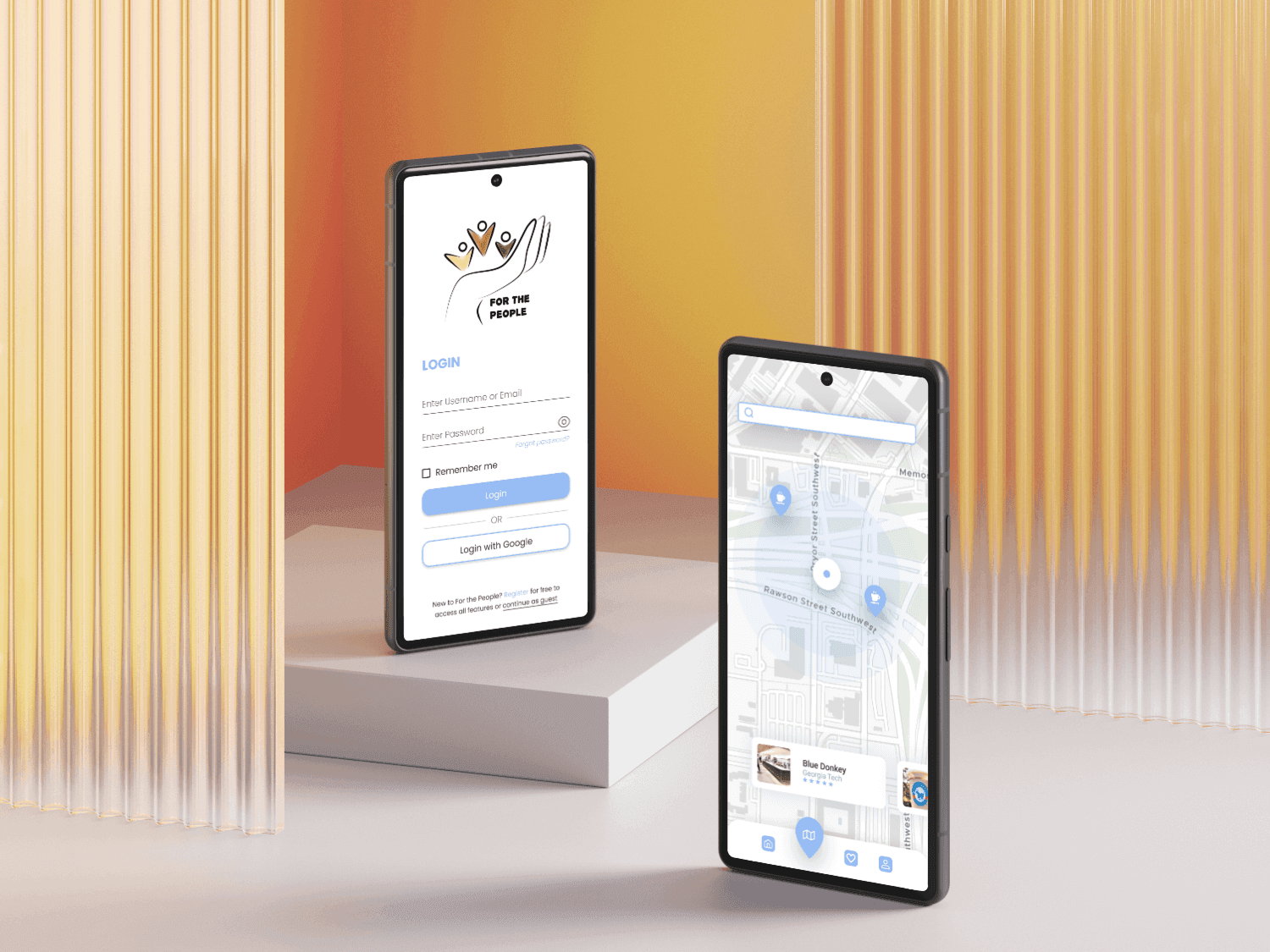
For The People

For the People is an app that connects users to small business owners, specifically targeted towards minority groups.

About the project

Date:

May 1, 2024

Client:

Mamie Harper

Services:

Branding

UX Research

App Design

For The People

Led the development of the For The People app UI and conducted user research with Maze to improve user experience.

Date:

August 2023 to May 2024

Client:

Mamie Harper

Skills:

App Design

UX Research

Branding

THE PROBLEM

Many small businesses fail within their first few years.

The state of marketing and oversaturation has created a space where businesses that spend a lot of money of marketing succeed. But what about the businesses that start with less funding?

“Over 50% of small businesses fail within their first five years due to the competition and lack of exposure. I want to create a space where these small businesses can get recognized and compete with these large corporations.”

Mamie Harper

Executive Director, Carrie's Closet of Georgia

THE SOLUTION

An app that focuses on marketing these small businesses and encourages users to support local, minority owned businesses.

Today's faced paced environment gives businesses a few seconds to grab people's attention. We wanted to slow down this pace and give these businesses the chance they deserve.
MY ROLE

I led the redesign of the For The People app and conducted UX research using surveys and Maze.

Our team picked up this project from a different team, but our client had major changes she wanted us to make. This app is currently in development and has been handed off to a different team as of May 2024.

OUR CLIENT'S VISION

Our client knew what she wanted, and we were here to bring it to life.

Our client wanted this app to focus on minority owned small businesses. Before we started designing, we wanted to get a better understand of what our users cared about.

Our detailers needed more...more tools to help them succeed.

Our calendar CRM and client management services had been out, but after talking with detailers, they gave us two suggestions that would take their businesses to the next level: personalized booking websites and in-depth analytics.

Our detailers needed more...more tools to help them succeed.

Our calendar CRM and client management services had been out, but after talking with detailers, they gave us two suggestions that would take their businesses to the next level: personalized booking websites and in-depth analytics.

50%

Spend money at local businesses at least a few times a week

40%

Of college students do not find socioeconomic background important

40%

Prioritize high rating when browsing through businesses

INSIGHTS

Users cared about ratings more than anything else.

Initially, our client wanted this app's main focus to be on discoverability of businesses through filters without any mention of reviews. We proposed to our client that adding ratings and reviews would increase the practicality of this app, and it ended up becoming one of the main features of our app.

OUR CHALLENGE

People did not care about socioeconomic background as much as we'd hoped.

This initially put a slight halt in our research process because socioeconomic background was the foundation of our app. After discussion with our team, we knew we had to go in a different direction.

With the age of digital marketing, we knew that the key to this app's success would lie in the presentation of our app. We decided that marketing our app as a business reviewing app would come first, with mentioning local minority owned businesses coming second.

Marketability is the key.

As a user, I want to be see businesses listed out from highest rated to lowest rated.

As a user, I want to use filters to discover new businesses in my general area.

As a user, I want to rate and review businesses that I have been to.

RESEARCH

We conducted a google forms survey and garnered over 50 responses. Here's how it went:

RESEARCH

We conducted a google forms survey and garnered over 50 responses. Here's how it went:

50%

Spend money at local businesses at least a few times a week

40%

Of college students don't find socioeconomic background important

40%

Prioritize high rating when browsing through businesses

INSIGHTS

Users cared about ratings more than anything else.

Initially, our client wanted this app's main focus to be on discoverability of businesses through filters without any mention of reviews. We proposed to our client that adding ratings and reviews would increase the practicality of this app, and it ended up becoming one of the main features of our app.

OUR CHALLENGE

People did not care about socioeconomic background as much as we'd hoped.

This initially put a slight halt in our research process because socioeconomic background was the foundation of our app. After discussion with our team, we knew we had to go in a different direction.

Marketability is the key.

With the age of digital marketing, we knew that the key to this app's success would lie in the presentation of our app. We decided that marketing our app as a business reviewing app would come first, with mentioning local minority owned businesses coming second.

As a user, I want to be see businesses listed out from highest rated to lowest rated.

As a user, I want to use filters to discover new businesses in my general area.

As a user, I want to rate and review businesses that I have been to.

IDEATION

Teamwork is key.

Our team took the time to define everyone's roles and ensure that our sprints would last an appropriate amount of time.
USER FLOWS

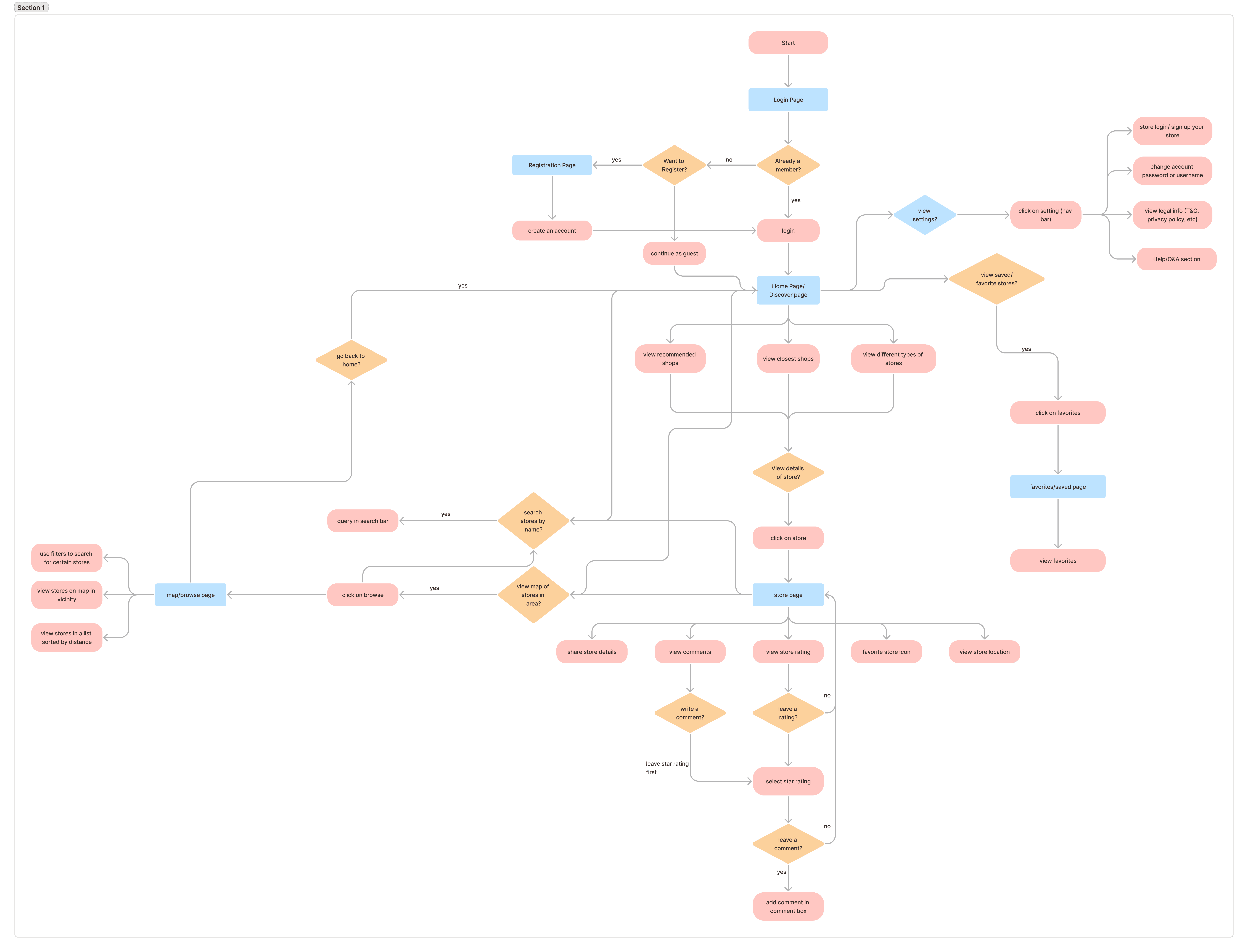
Defining each of the key features of our app.

Based on our survey, we identified major routes our users would take:

  1. The user can favorites businesses and come back to them later.

  2. Filters help the user find a new businesses.

  3. Reviews are written by any user.

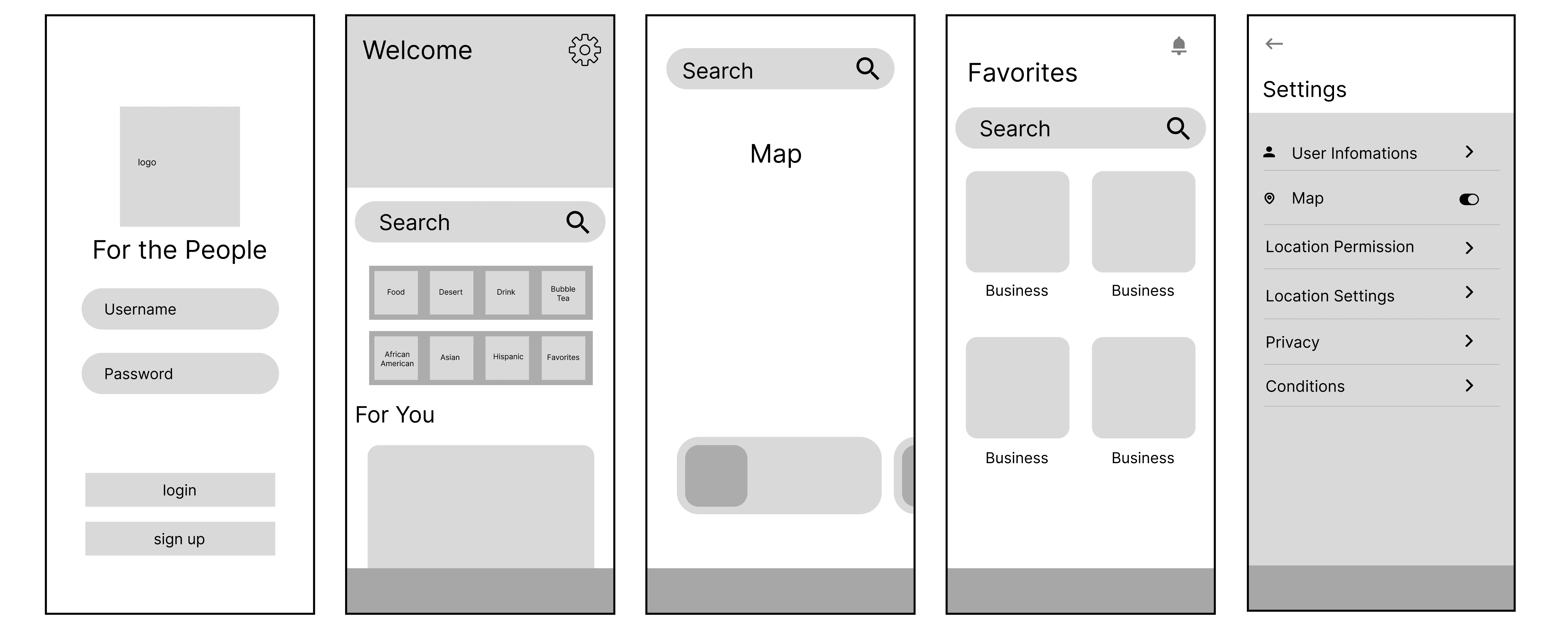
LOFI

Our initial lo-fi of our app had two main priorities: visibility and intuitively.

We wanted the filters to be front and center when the users opens the app, and we also wanted them to have their specialized business list that is catered to their past searches. Once we got our lo-fi approved by our client, we moved on to building our brand.
BRANDING

Representation is a key part of our brand.

Our client wanted a dynamic logo that would be able to change based on what we were promoting that month or day. For example, our rainbow logo would be dedicated to pride month. We refrained from using stereotypical colors for races as we and our client did not think it would be appropriate.

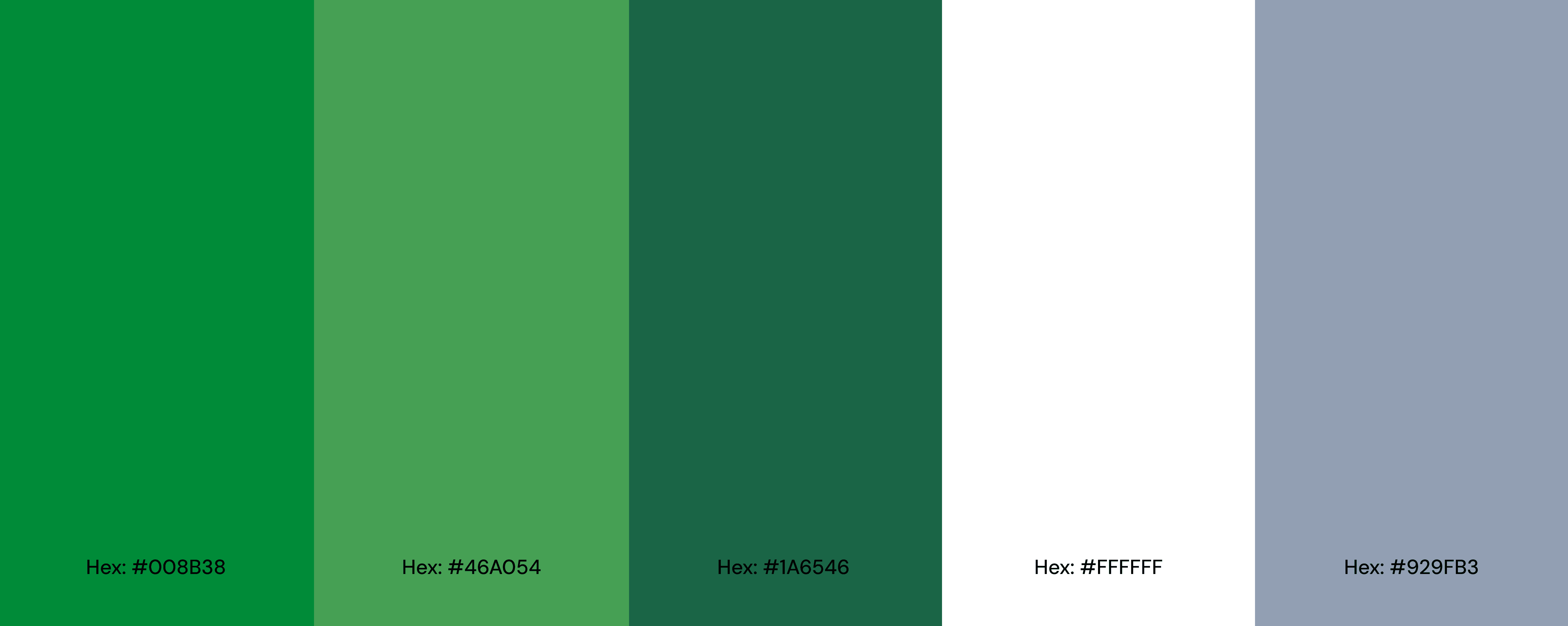
For our color palette, we assessed our options and landed on a monochromatic green color palette. Green, in terms of food, typically indicates freshness so we felt that that it was appropriate for an app that primarily consists of restaurants.
HI-FI

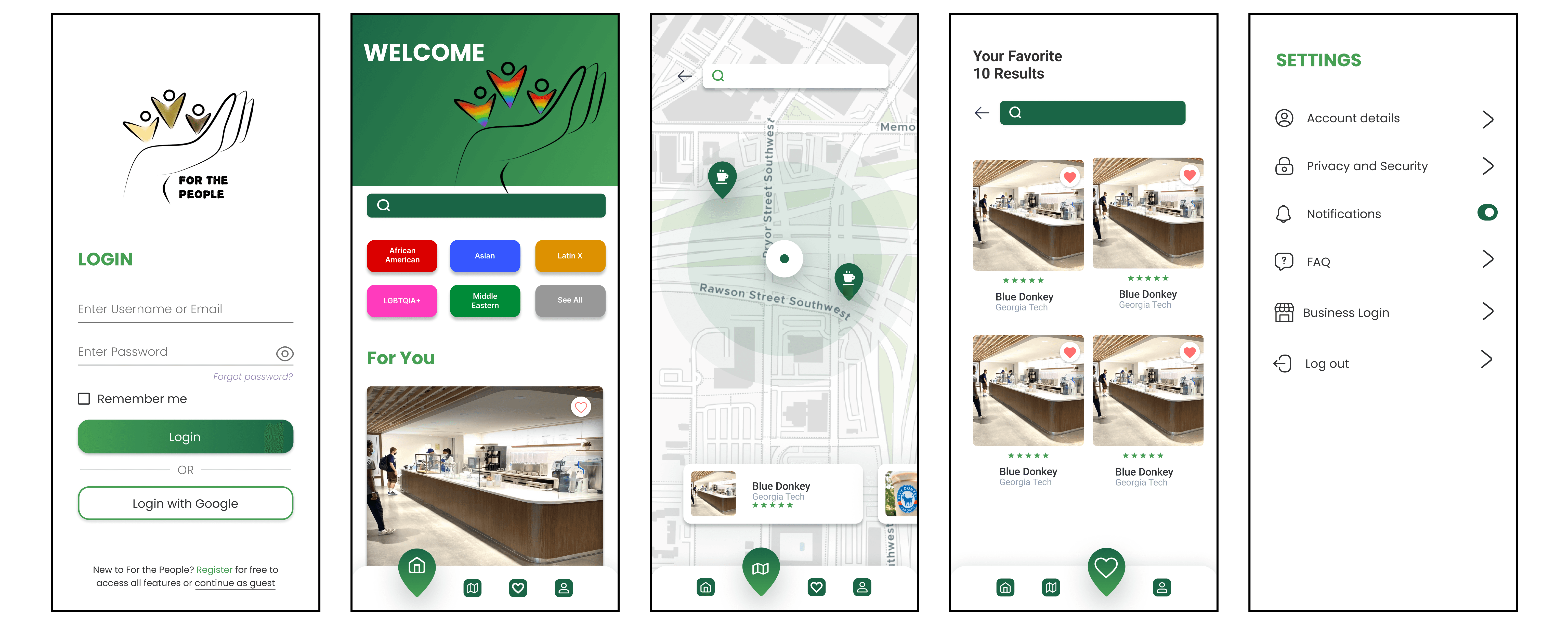
Bringing color to our lo-fi.

For our first iteration, I was in charge of the homepage of our app as well as elements of the favorites page. Although there were a few changes to be made in discussion, we decided to stay mostly true to the original lo-fi design we created.
FEEDBACK

We used Maze to determine how well we did.

We had about 20 participants test five tasks:

  1. Login into our app. Assume you are already a member.

  2. Sign up for a business account.

  3. Go to the notifications page and turn off your notifications.

  4. Search up a restaurant.

  5. Navigate to the favorites page and favorite a restaurant.
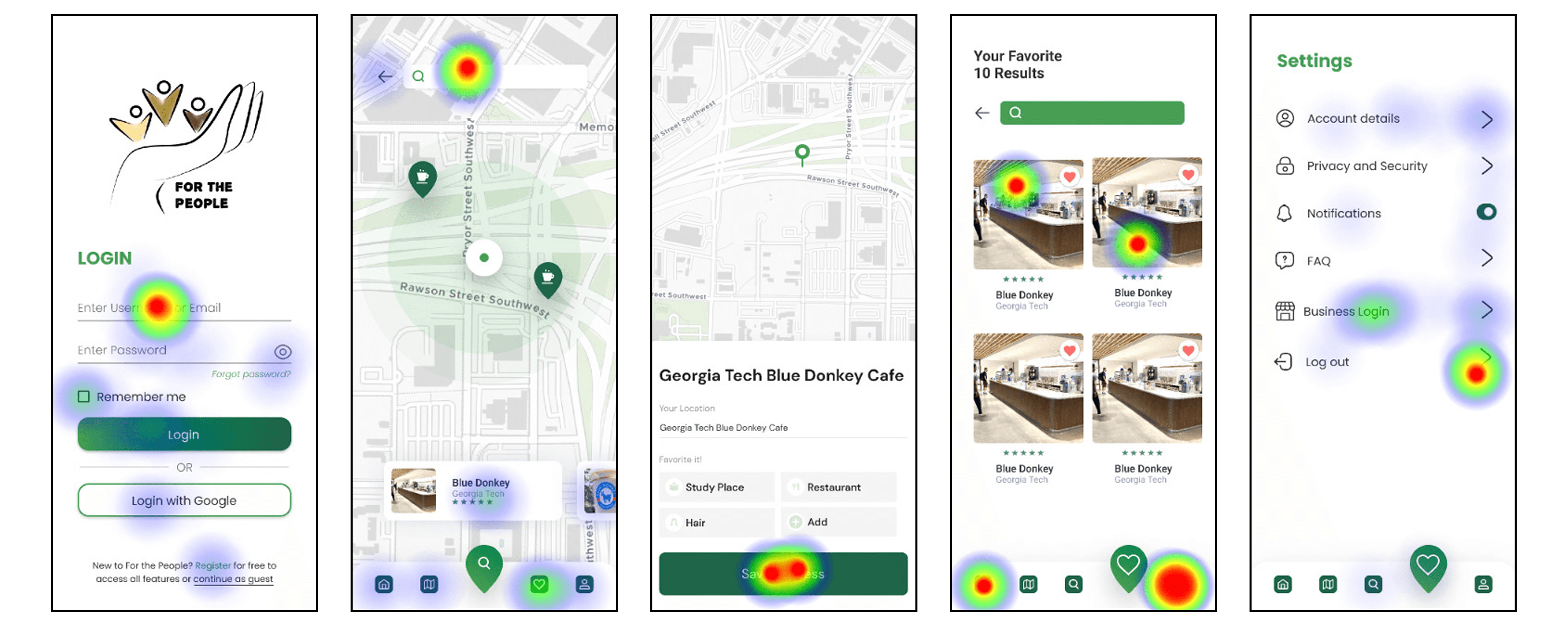
Heatmaps of tested pages

Tasks 1, 3, and 5 had a success rate of

50%

Task 2 had a mis-click rate of

40%

Task 2 had a direct success rate of

28%

We concluded the user flows of task 1, 3, and 5 needed little to no adjustment when moving forward in our final designs of the app. However. we had the most friction with task 2: Sign up for a business account. Making an easy process for businesses to sign up was one of our goals, and this data helped us understand that we needed visible separation at the start of our account creation flow.
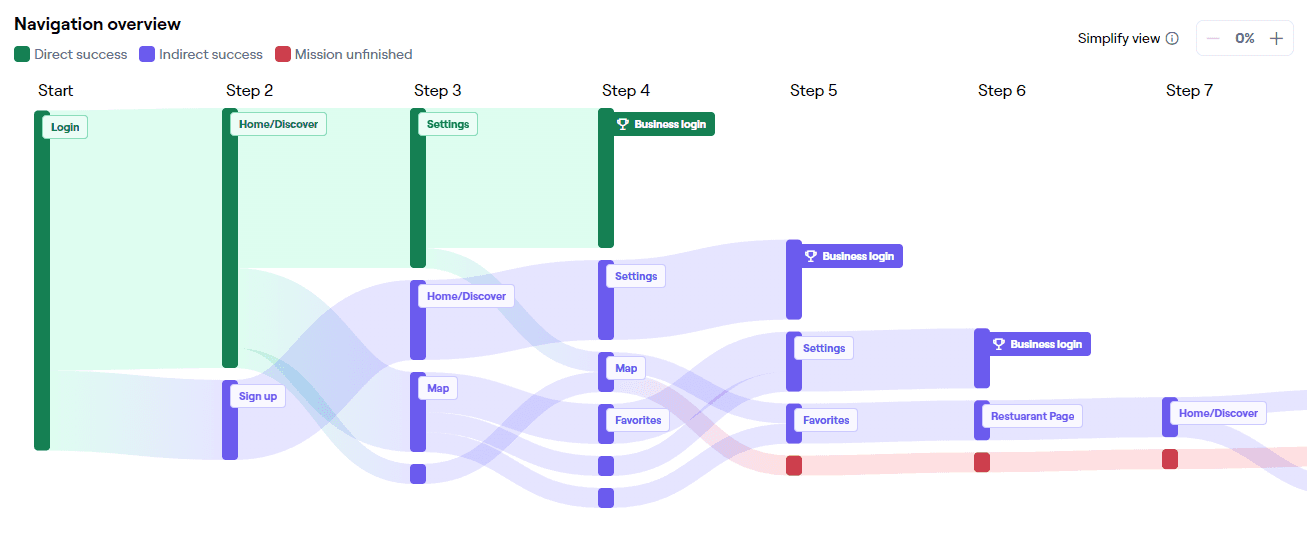
Success flow of task 2

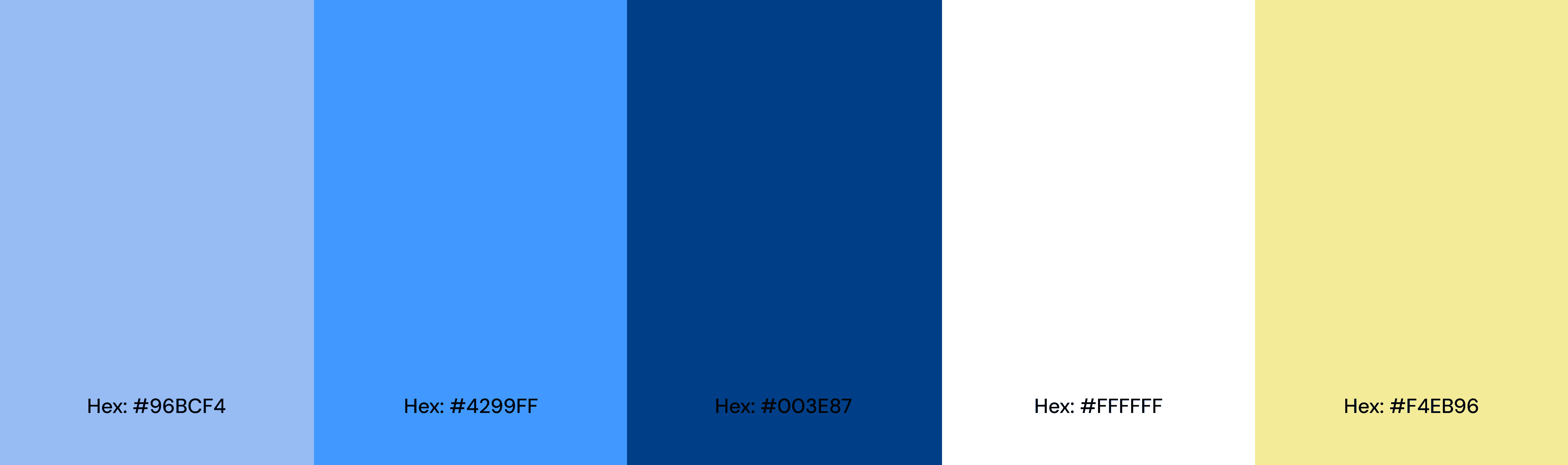
Additionally, our client gave us feedback pertaining to the visual aesthetics of the app. She requested the color palette to be changed to something less common in this niche. She also wanted us to experiment with different orientations for the filters on our homepage because only six were displayed at one moment. Our team went back to the drawing board and discussed new possible color palettes.

COLOR PALETTE

Avoiding stereotypes was a challenge.

For color palette, we put a bigger emphasis on a monochromatic scale to remove the politics of associating ethnicities with certain colors. Our client ended up choosing a light blue palette to represent a soothing, trustworthy environment.
FINAL DESIGNS

We fixed the issues in our designs.

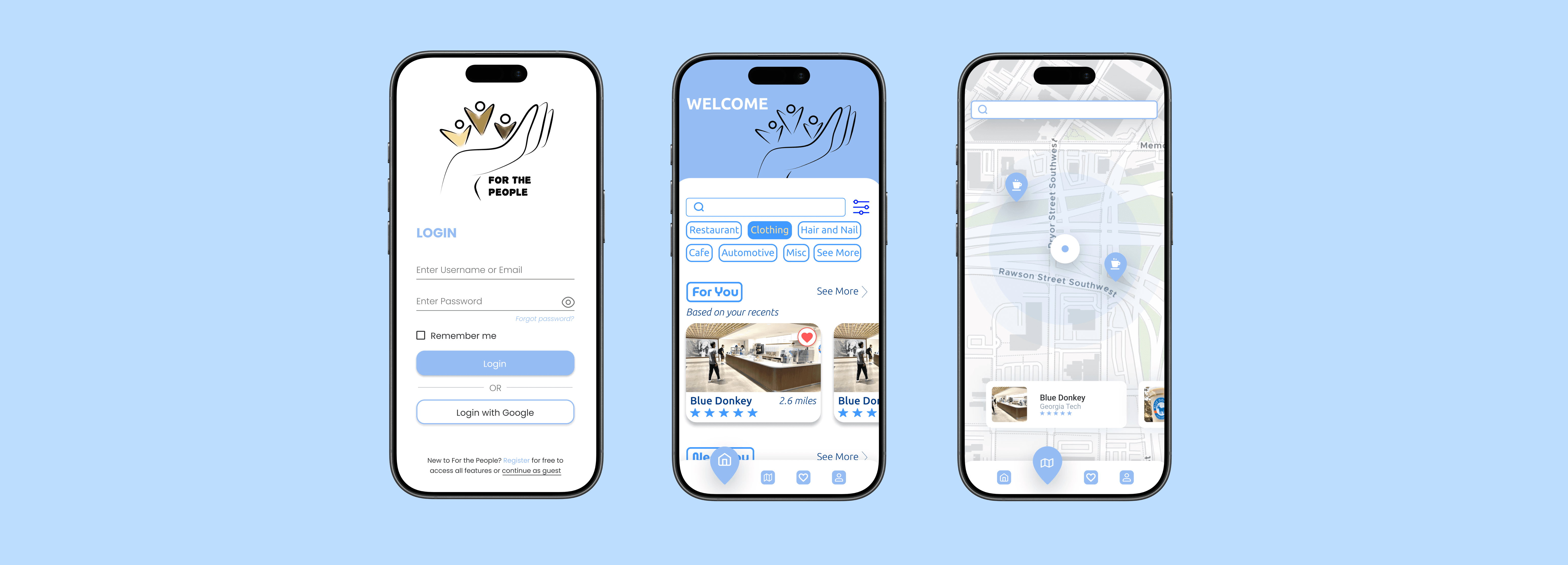
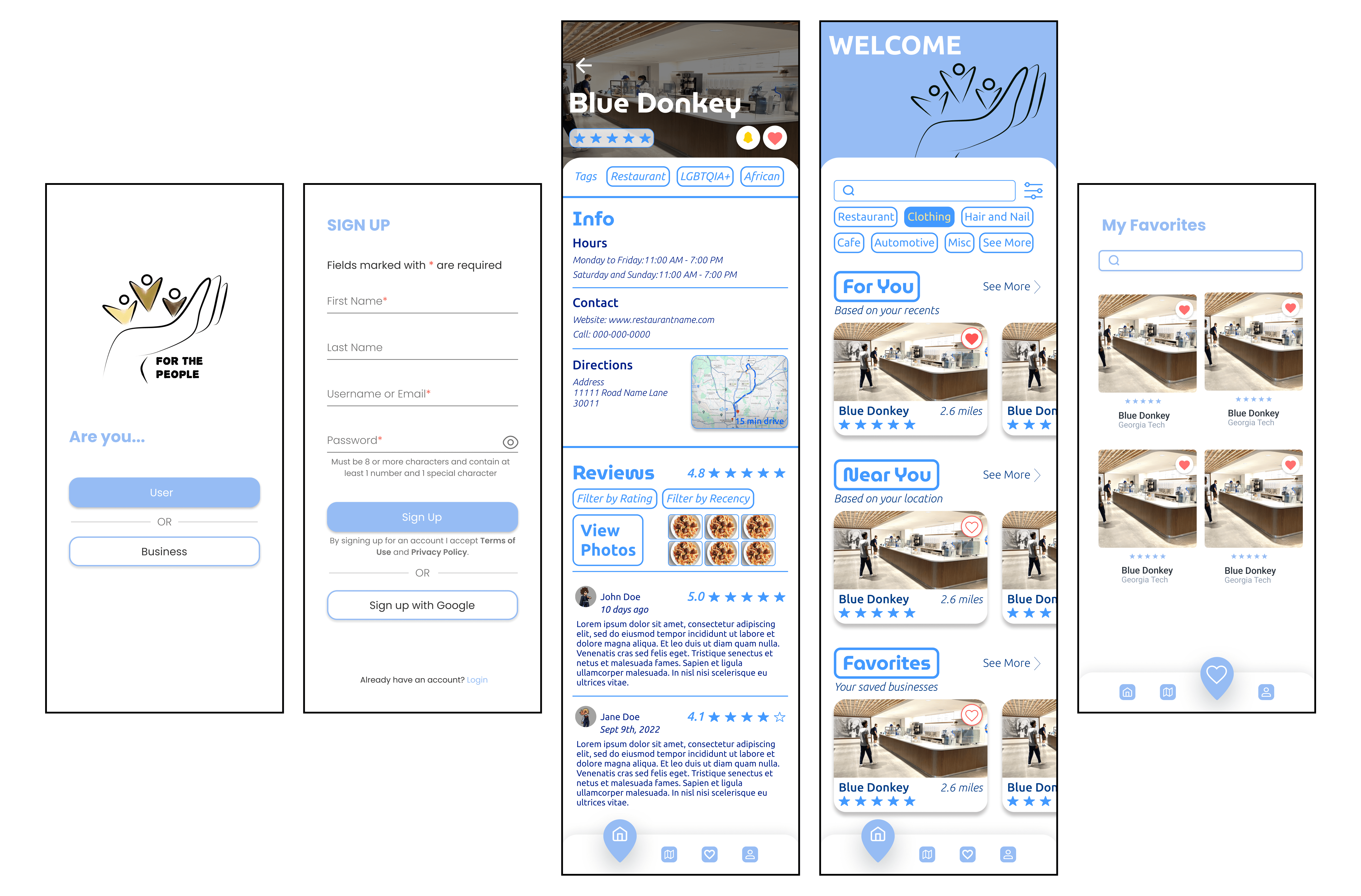
We put an emphasis on visual aesthetics that stand out, better button clarity to prevent mis-clicks, and a more intuitive account creation flow. As for the filter buttons on the main homepage, we decided to reformat the buttons entirely to create more space for more filters and better indicate it was indeed a filter rather than a page traversal button. Lastly, we added an additional page at the beginning of our account creation flow to better account for businesses that are logging in. This change allowed businesses to directly make an account or log in without having to go through the same flow as a user.
EXPO PRESENTATION

The final leap.

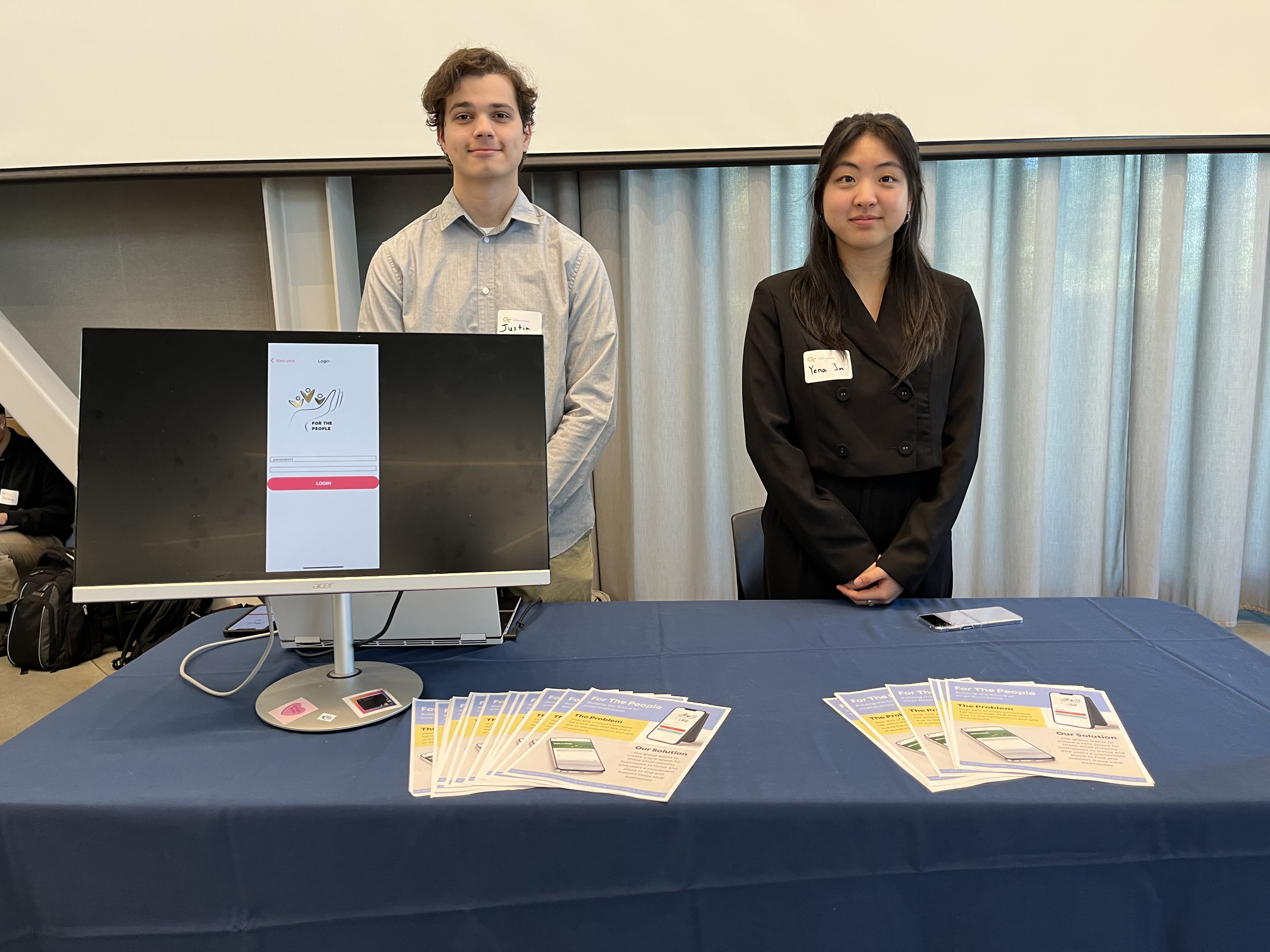
Our team got to present For The People at an expo event full of small start up companies promoting their apps. We got to speak to working professionals in the tech industry and gathered insights on how to further this concept on a larger scale.

This was the last day we were contracted to work on For The People. The development of this app was handed off to our client in May 2024.
LESSONS LEARNED
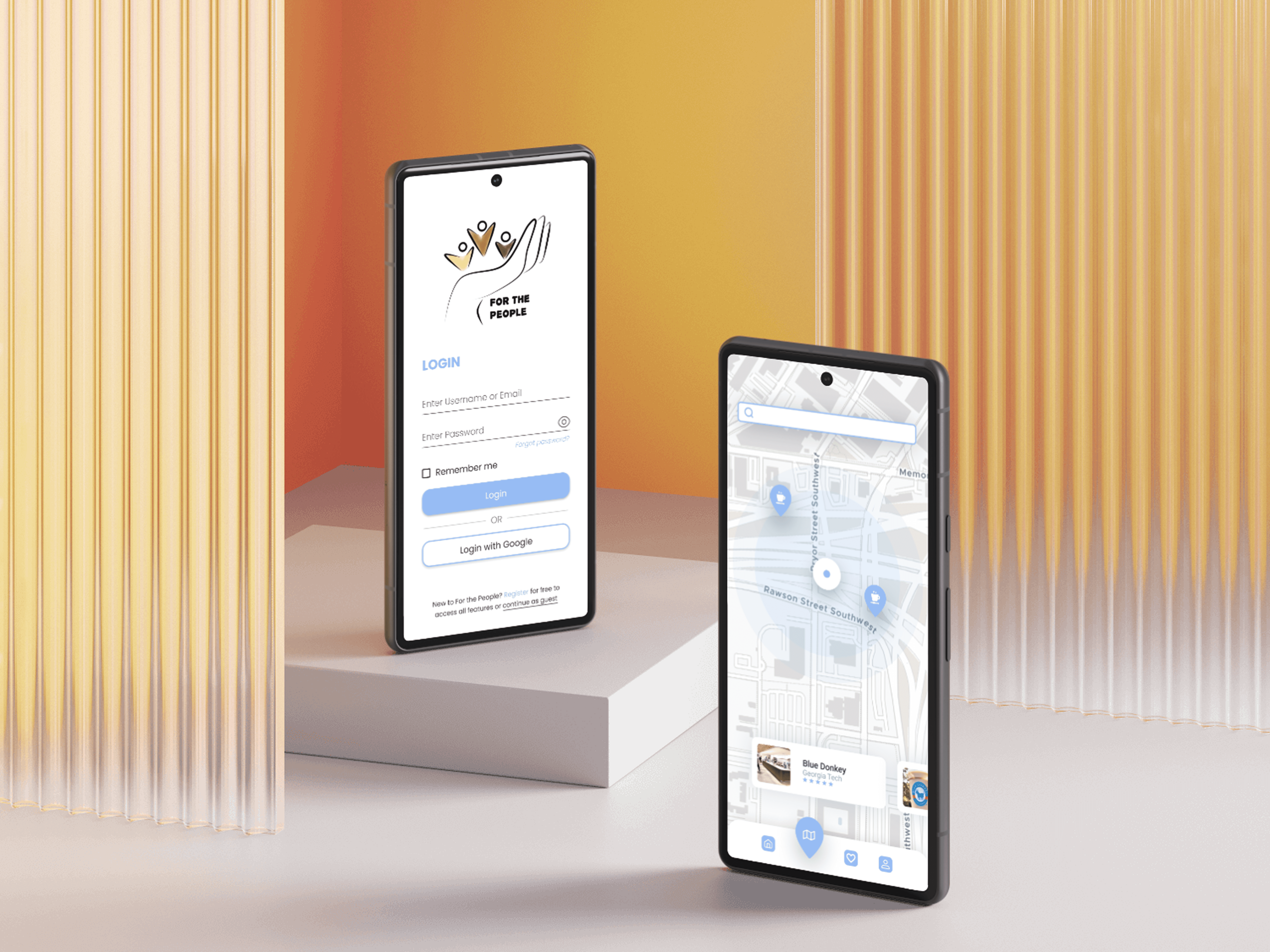
Although we are satisfied with the end result, we ran into many problems along the way.

For many of our team members, this was our first attempt at creating an app from conception to execution. From this project, we gained irreplaceable experience at participating at a large scale tech convention as well as pitching our app to dozens of tech professionals. Here are some lesson I have learned:

  1. We can't please everyone and that's okay. Even though our app wanted to make strides in creating an inclusive space, matching colors to ethnicities proved to be a difficult task. It made our team realize that every decision has implications and meaning and as designers, we need to account for everything.

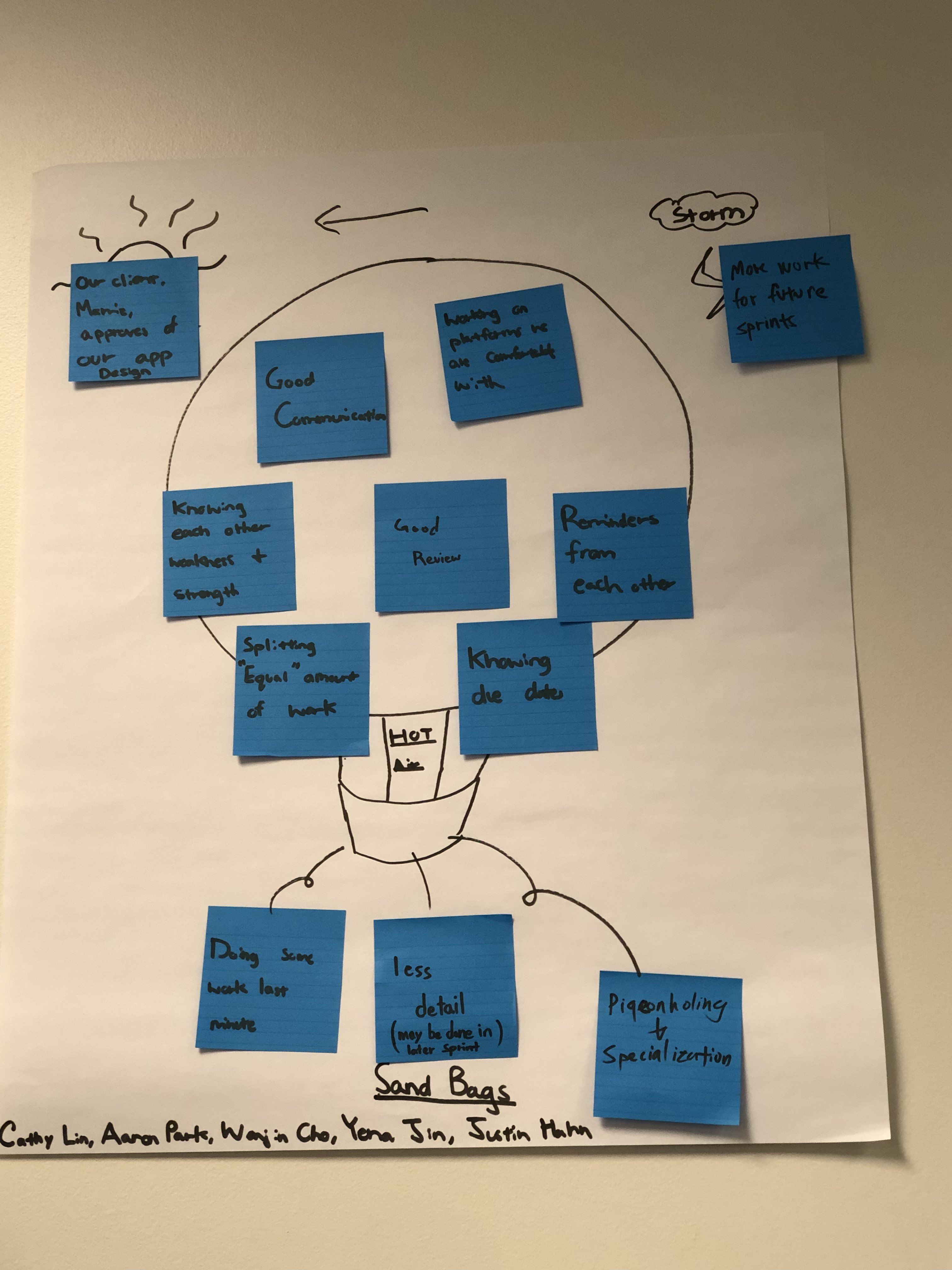
  2. Communication is key. Seems like a simple lesson, but this is a lesson you learn only after working with a larger team. There were moments where communication was slow and misunderstood and that's just part of the process. Not everyone will work the way you want them to and that's the reality of a team. Learn each other's strengths and weaknesses and help each other grow.

Although we are satisfied with the end result, we ran into many problems along the way.

For many of our team members, this was our first attempt at creating an app from conception to execution. From this project, we gained irreplaceable experience at participating at a large scale tech convention as well as pitching our app to dozens of tech professionals. Here are some lesson I have learned:

  1. We can't please everyone and that's okay. Even though our app wanted to make strides in creating an inclusive space, matching colors to ethnicities proved to be a difficult task. It made our team realize that every decision has implications and meaning and as designers, we need to account for everything.

  2. Communication is key. Seems like a simple lesson, but this is a lesson you learn only after working with a larger team. There were moments where communication was slow and misunderstood and that's just part of the process. Not everyone will work the way you want them to and that's the reality of a team. Learn each other's strengths and weaknesses and help each other grow.

Although we are satisfied with the end result, we ran into many problems along the way.

For many of our team members, this was our first attempt at creating an app from conception to execution. From this project, we gained irreplaceable experience at participating at a large scale tech convention as well as pitching our app to dozens of tech professionals. Here are some lesson I have learned:

  1. We can't please everyone and that's okay. Even though our app wanted to make strides in creating an inclusive space, matching colors to ethnicities proved to be a difficult task. It made our team realize that every decision has implications and meaning and as designers, we need to account for everything.

  2. Communication is key. Seems like a simple lesson, but this is a lesson you learn only after working with a larger team. There were moments where communication was slow and misunderstood and that's just part of the process. Not everyone will work the way you want them to and that's the reality of a team. Learn each other's strengths and weaknesses and help each other grow..

50%

Spend money at local businesses at least a few times a week

40%

Of college students do not find socioeconomic background important

40%

Prioritize high rating when browsing through businesses

RESEARCH

We conducted a google forms survey and garnered over 50 responses. Here's how it went:

INSIGHTS

Users cared about ratings more than anything else.

Initially, our client wanted this app's main focus to be on discoverability of businesses through filters without any mention of reviews. We proposed to our client that adding ratings and reviews would increase the practicality of this app, and it ended up becoming one of the main features of our app.

OUR CHALLENGE

People did not care about socioeconomic background as much as we'd hoped.

This initially put a slight halt in our research process because socioeconomic background was the foundation of our app. After discussion with our team, we knew we had to go in a different direction.

With the age of digital marketing, we knew that the key to this app's success would lie in the presentation of our app. We decided that marketing our app as a business reviewing app would come first, with mentioning local minority owned businesses coming second.

Marketability is the key.

As a user, I want to be see businesses listed out from highest rated to lowest rated.

As a user, I want to use filters to discover new businesses in my general area.

As a user, I want to rate and review businesses that I have been to.